Diwali Traditions Explained: What Rangoli, Diyas, and Sweets Actually Mean
Every tradition is really just a story wearing a costume
Ask most kids why we do rangoli or light diyas during Diwali, and you'll probably get a shrug. Ask most adults, honestly, and you might get a slightly more confident shrug. Traditions have a way of surviving long after their explanations get fuzzy. So let's fix that, one tradition at a time, in language simple enough to hand straight to a five-year-old tonight.
Rangoli: welcoming good luck through the front door
Rangoli is a design made from colored powder, rice, flower petals, or sand, usually laid out right at the entrance of a home. The idea is simple: prosperity and good fortune are guests too, and a beautiful welcome mat made of color invites them in. Kids love this one because it's hands-on. Even a toddler can drop flower petals into a rough circle and feel like they've contributed something real.
Diyas: light finding its way home
A diya is a small oil lamp, usually just a clay cup with a wick and a bit of oil or ghee. Families line windowsills, doorways, and courtyards with them on Diwali night. The meaning behind it is almost poetic once you say it out loud: light always finds its way home, and so should we. It's also, functionally, an ancient version of a porch light — a signal that says you're welcome here.
Sweets: joy that's meant to be shared
Mithai — the sweets exchanged during Diwali — aren't just dessert. Sharing them with neighbors, extended family, and friends is a way of saying that joy isn't worth much if it's kept to yourself. A plate of gulab jamun handed to a neighbor carries more meaning than the sugar suggests.
Cleaning: a fresh start before the light arrives
In the days leading up to Diwali, homes get scrubbed top to bottom. It's not just tidiness for its own sake. The custom holds that Lakshmi, the goddess of prosperity, visits homes that are clean and welcoming. So the cleaning isn't a chore tacked onto the holiday, it's part of the holiday itself, a physical way of making space for something good to walk in.
Togetherness: the tradition underneath all the others
If you zoom out, every single tradition above points at the same idea from a different angle. Rangoli welcomes people in. Diyas guide them home. Sweets get shared, not hoarded. Cleaning makes room for guests. Diwali, at its core, is a five-day argument for togetherness, dressed up in color and light.
Meeting each tradition through a story
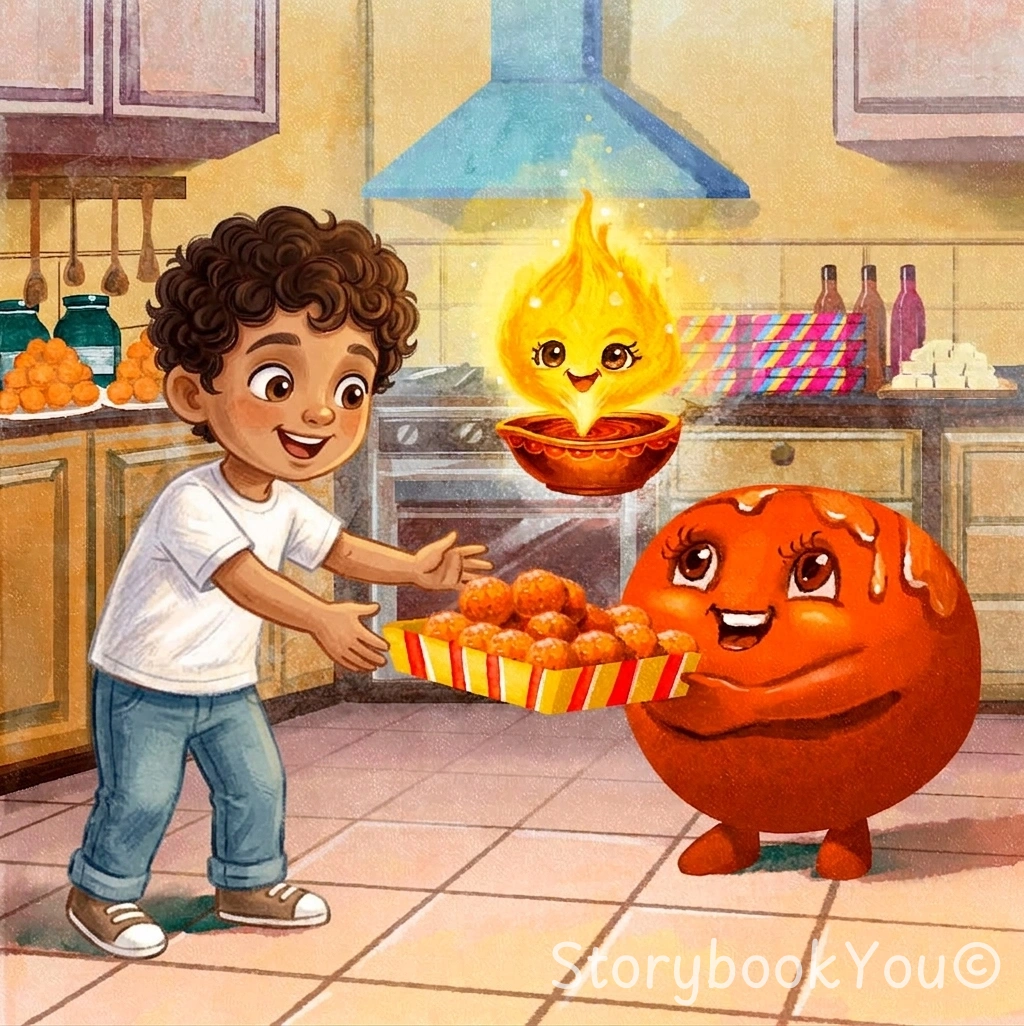
This is exactly the structure behind The Guiding Light of Diwali, a personalized storybook where your child meets a character representing each tradition: Rang for rangoli, Phuljhadi the sparkler who believes light always wins, Mithai for sweets, and Safai for the fresh-start cleaning. Jyoti, the guiding diya, leads the way through all of it before your child finally meets Lakshmi herself.
Because your child's actual name and personalized character throughout, the traditions land less like facts and more like something they experienced firsthand. You can preview the full story free before deciding whether to order — a nice way to see whether the format clicks with your family before spending anything.