Hanukkah Traditions Explained: What the Menorah, Latkes, Dreidel, and Gelt Actually Mean
Every tradition is really just a story you can hold in your hands
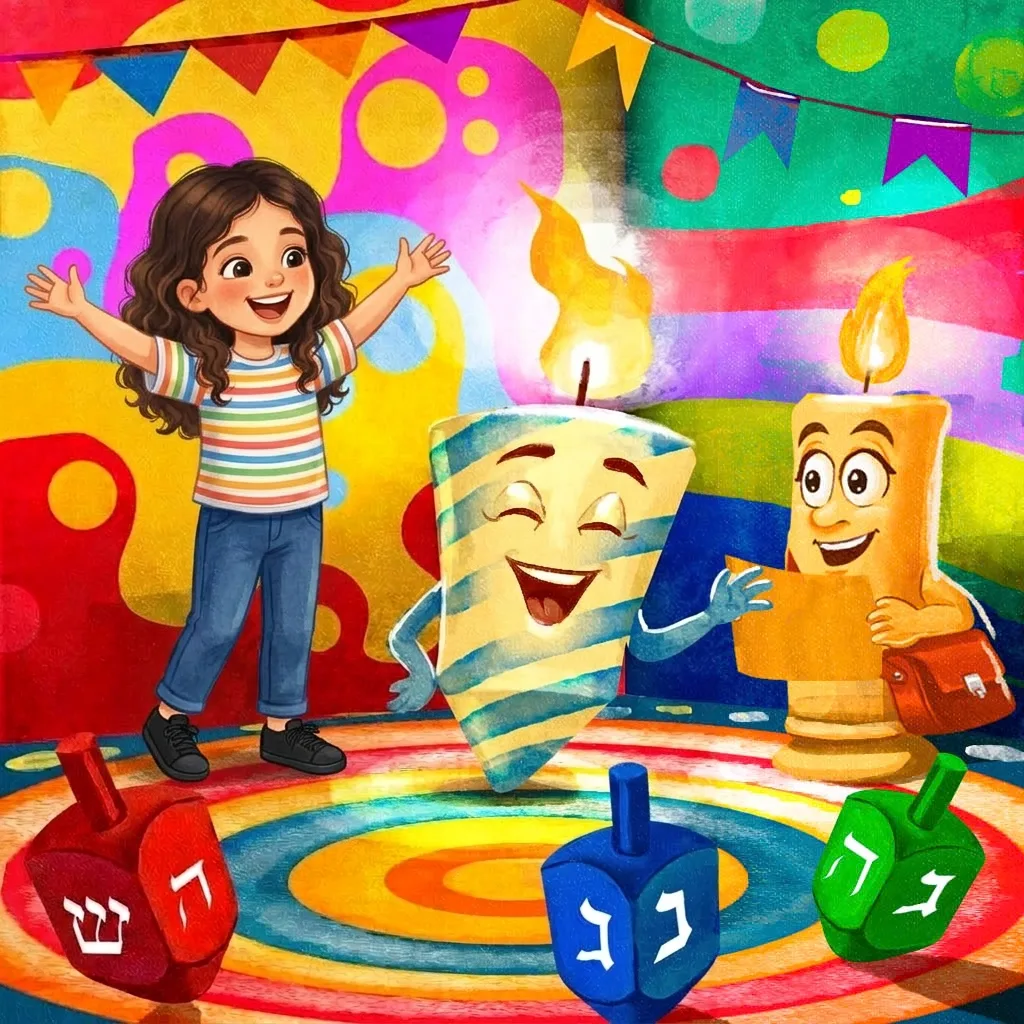
Ask most kids why we spin a dreidel or fry latkes during Hanukkah, and you'll get a shrug. Ask most adults at the same table and you might get a slightly more confident shrug, plus "something about oil." Traditions have a way of surviving long after the explanation gets fuzzy. So let's fix that, one custom at a time, in language you can hand straight to a five-year-old tonight.
The menorah: adding light on purpose
The Hanukkah menorah — sometimes called a hanukkiah — has nine branches. Eight are for the eight nights. The ninth is the shamash, the helper candle, the one that lights the others and then stands a little apart. You start with one flame and add one more each night until the whole thing is glowing. Kids understand this immediately. It's the same satisfaction as filling in a sticker chart, except the reward is a windowsill full of light.
The shamash is my favorite part to explain, because it gives one candle a job. Helper. That's a word kids already like being called.
The miracle of the oil: a little was enough
The short version: when the Temple in Jerusalem was rededicated, there was only enough consecrated oil to keep the lamp burning for one day. It lasted eight. That's why Hanukkah is eight nights, and why oil shows up in the food, the story, and the candles. You don't have to get into every historical layer for a preschooler. "They thought the light would go out. It didn't." is a complete sentence.
Latkes: the miracle you can smell from the driveway
We fry potato pancakes — and sufganiyot, the jelly doughnuts, if that's your family's thing — in oil because the holiday's central story is about oil. That's the meaning. The other meaning is that a kitchen that smells like onions and potatoes makes a house feel like a holiday even if the rest of the day was errands and laundry. Let kids grate (safely), flip (supervised), or just do the very important work of tasting and announcing a favorite.
Dreidel: a game that remembers something
A dreidel is a four-sided spinning top. The Hebrew letters on the sides — nun, gimel, hey, shin — stand for "a great miracle happened there." (In Israel the last letter changes, because there becomes here.) You play for a pot of gelt, and someone always insists the rules are different than last year.
For little kids, don't overteach the letters on night one. Teach the feeling: we play, we laugh, we sit on the floor together. The history can ride along quietly.
Gelt: sweet gifts, and the habit of giving
Gelt started as real coins, a way to give children something of their own and, in many families, to practice tzedakah — giving some of it away. Now it's usually chocolate wrapped in gold foil, which is not a downgrade if you have ever watched a three-year-old unwrap one like it's treasure. The meaning underneath is still there: Hanukkah includes generosity. The richness is supposed to be shared.
Courage: the tradition underneath the others
If you zoom out, the lights, the oil, the food, the game, and the coins all point at the same idea from different angles. Keep the light going. Make a little last. Gather people around something warm. Play anyway. Give something away. Underneath Hanukkah is courage — not the movie kind, the everyday kind. Lighting one more candle when the week is already long.
Meeting each tradition through a story
This is the structure behind The Lights of Hanukkah, a personalized storybook where your child meets a character for each piece of the holiday. Shamash is the helper who leads the way. Judah stands for the courage of the Maccabees. Nes — her name means "miracle" — guards the memory of the light that never went out. Ollie talks about the oil, and how a little faith can make a lot of light. Latke fries the pancakes. Gelt shares the chocolate coins. Dreidel just wants everyone to play. And Or, whose name means light, says the quiet thing at the end: even in darkness, there is always hope.
Because your child's actual name and face are in the story, the traditions land less like facts and more like something they walked through. You can preview the full book free before deciding whether to order — a nice way to see if it fits your family's Hanukkah shelf without spending anything first.