Diwali for Kids Who Don't Know What Diwali Is (A Guide for Classrooms & Mixed Families)
For teachers, grandparents, and anyone walking in without a head start
Maybe you're a teacher with one student who's suddenly buzzing about diyas and rangoli, and you'd like to say something more informed than "that sounds fun!" Maybe you're a grandparent whose grandchild is being raised in a household that celebrates a holiday you never grew up with. Or maybe your family is interfaith, and you want to show up for Diwali without pretending to know more than you do. Whatever brought you here, the good news is this: you don't need years of background to understand Diwali. You just need the right starting point.
You're not expected to know this already
Let's get the awkward part out of the way. It's completely normal to not know what Diwali is if it wasn't part of your own upbringing. Nobody's grading you on prior knowledge. The best approach isn't pretending familiarity, it's asking genuine, simple questions and being open about learning alongside the kids in your life.
The one-sentence version
If you only remember one thing: Diwali is the Festival of Lights, a celebration of light winning over darkness and good winning over difficulty, marked by lamps, colorful patterns at doorways, shared sweets, and time with family.
The slightly longer version
Diwali (also called Deepavali) is one of the most widely celebrated festivals in Hindu, Sikh, and Jain traditions, though the specific stories behind it vary by community. It runs five days, with the main celebration falling on the darkest night of the lunar month, when families:
- Light small oil lamps called diyas around the home
- Create colorful floor designs called rangoli near the front door
- Clean the house thoroughly, welcoming a fresh start
- Share sweets (mithai) with family, friends, and neighbors
- Gather for a meal and, often, fireworks after dark
None of this requires deep religious literacy to appreciate or respect. It requires showing up with curiosity.
For teachers: how to talk about it in a classroom
If you've got even one student celebrating Diwali, a short, simple classroom moment goes a long way — reading a picture book, asking that student if they'd like to share something about their family's traditions, or doing a small rangoli craft with paper and colored shapes. The goal isn't a comprehensive religious studies lesson. It's making one kid feel seen and the rest of the class a little more curious about the world.
For grandparents and extended family
If your grandchild is being raised with Diwali traditions you didn't grow up with, the most meaningful thing you can do is ask them to teach you. Kids love being the expert for once. "Can you show me how rangoli works?" or "What's your favorite Diwali sweet?" turns you into an engaged participant instead of an outside observer.
A story built for exactly this situation
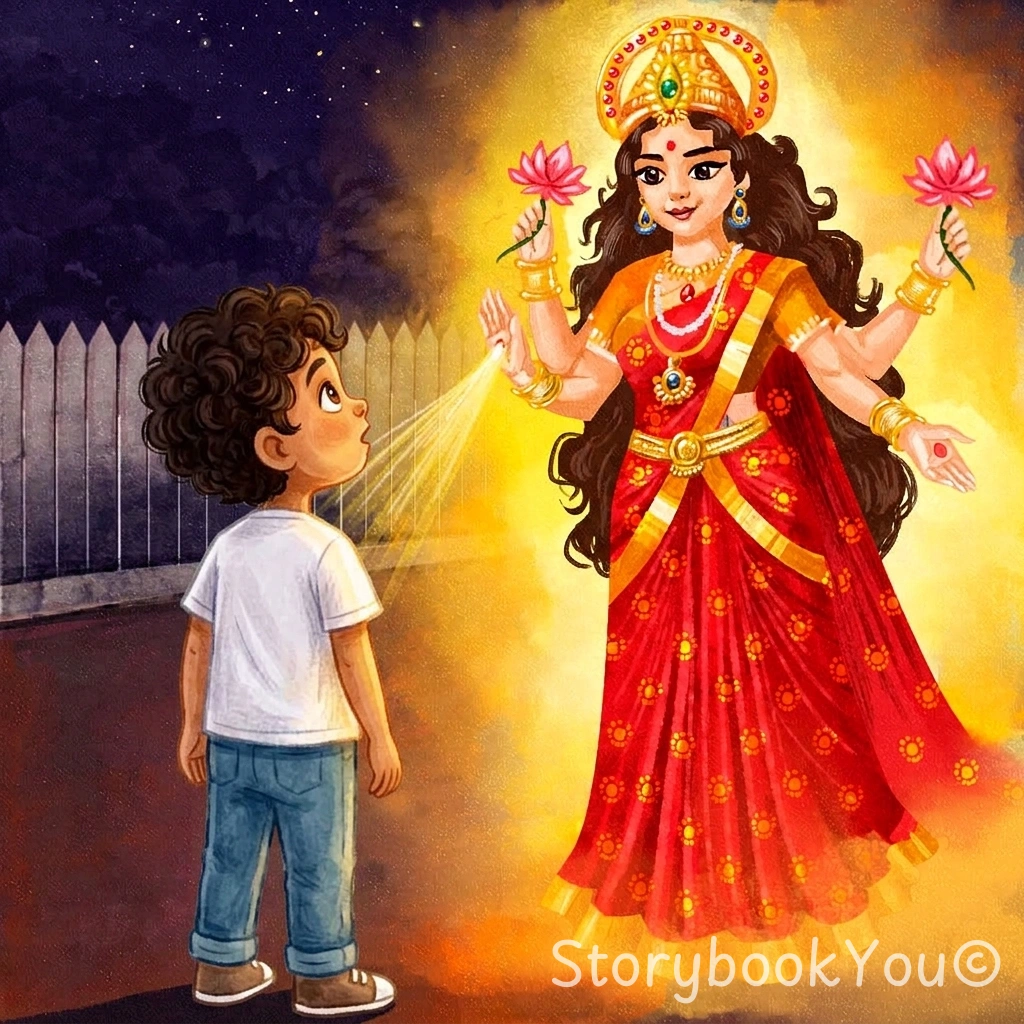
Here's something worth knowing: The Guiding Light of Diwali, a personalized children's storybook, is structured so that the child character discovers Diwali's meaning in real time, alongside the reader. There's no assumed prior knowledge baked into the plot. A magical diya named Jyoti guides the way, introducing rangoli, sparklers, sweets, and cleaning one at a time, before the story wraps up with a meeting with Lakshmi.
Because your own child's name and photo can appear throughout the book, it works just as well as a first introduction to Diwali as it does for a family that's celebrated it for generations. You can preview the whole thing free, which makes it an easy, low-pressure way to bring the holiday into a home — or classroom — that's approaching it for the first time.